
Then
It is essential that we do not forget where we have come from
Northampton section's history stretches back more than 60 years but the town's connection to motorcycles dates from the early years of the 20th century
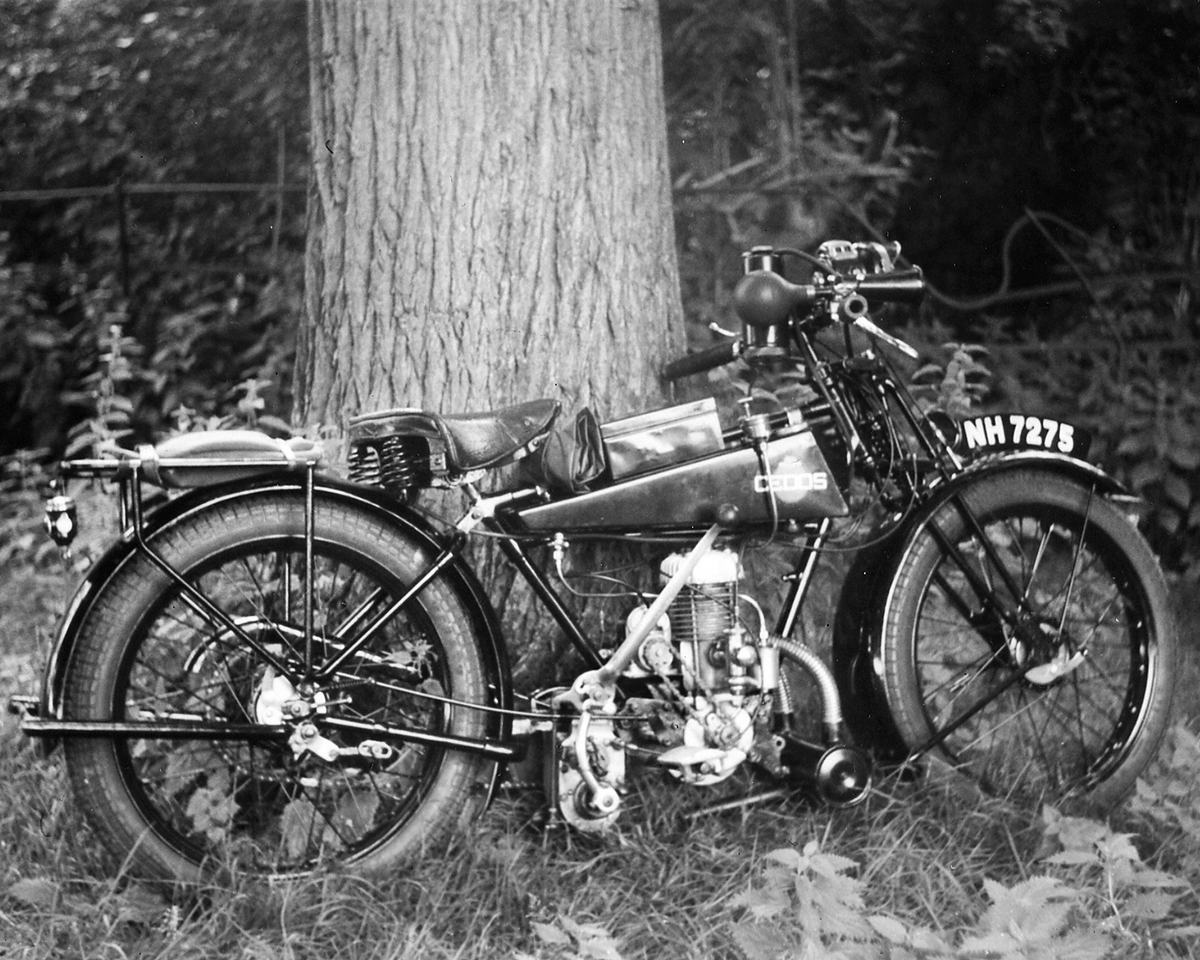
The Northampton section of the VMCC was founded in 1960 but motorcycling was long established in the town before that. The start of the 20th century saw a number of motorcycle manufacturers set up in the town including Advance, Princeps and Whirlwind. The numbers built are not so great nor the names so well remembered as those from nearby Coventry but are important to Northampton. Later in the century a more well-known name - Cedos - saw the light of day and continued until the late 1920s. Then in the 1960s another motorcycling star burst on to the Northampton scene but, regrettably, the Scorpion only lasted as long as a shooting star. There are still examples of these machines in existence, some owned by members of the section. You can see more information here click here
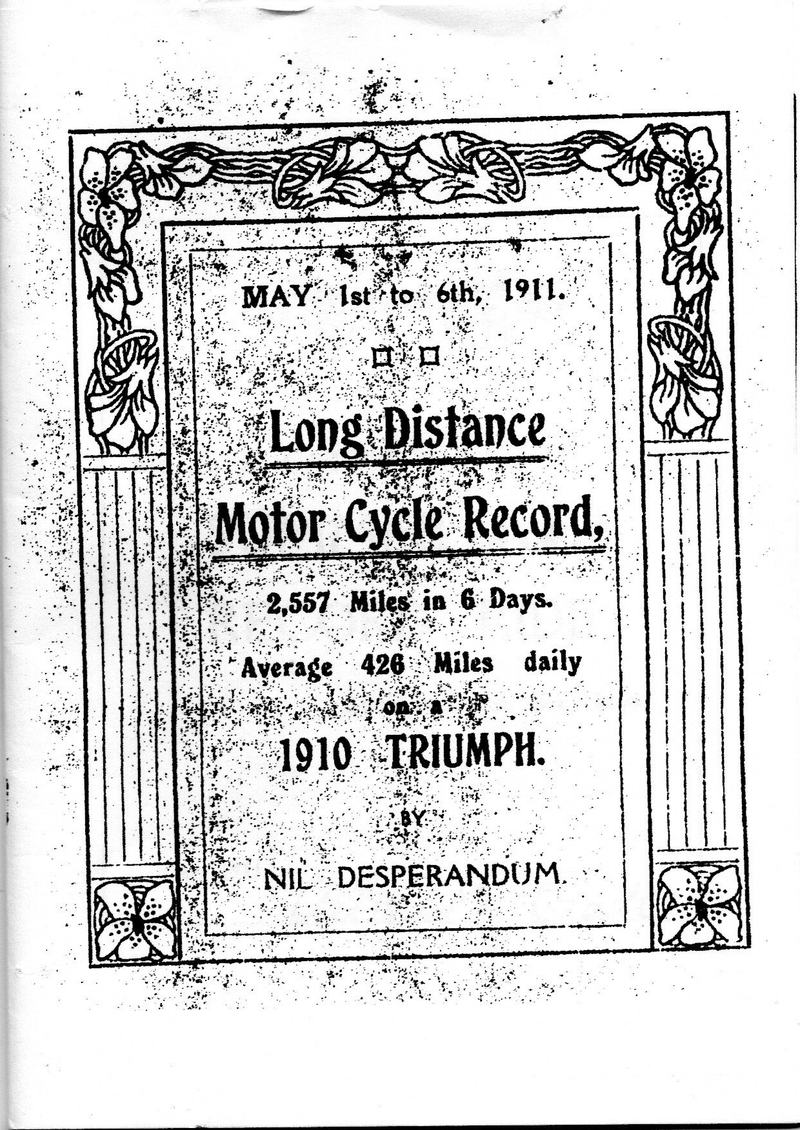
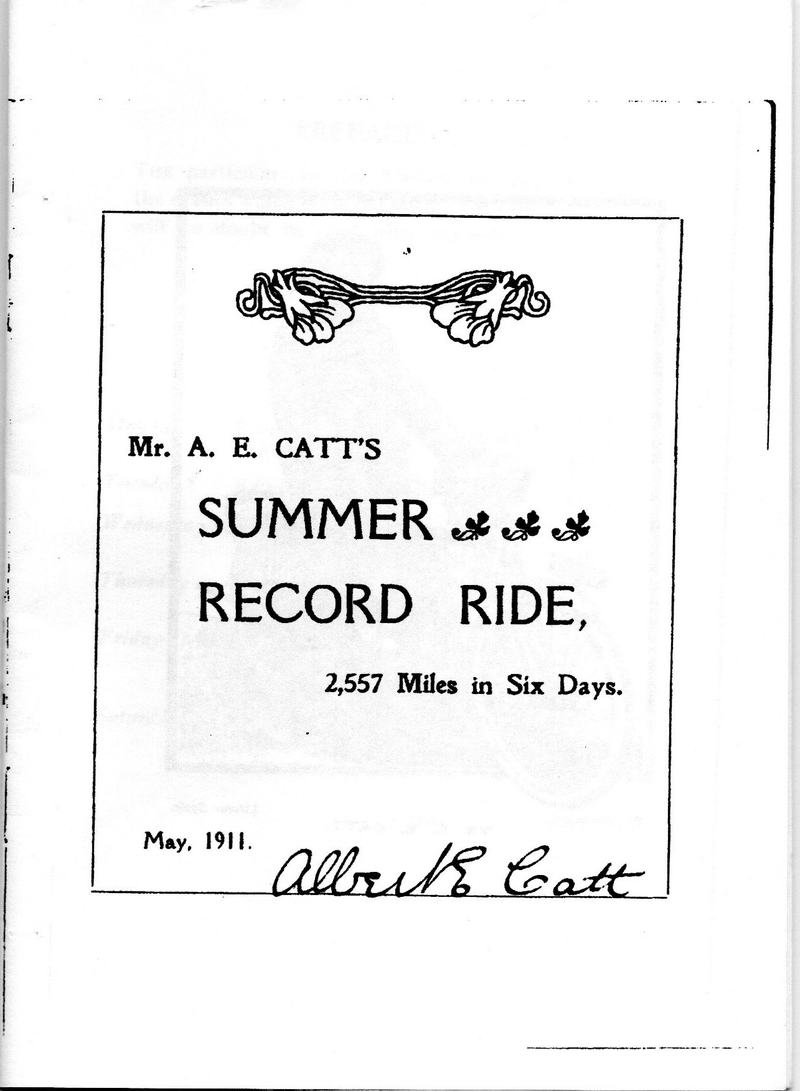
Another early Northampton motorcycle legend was Albert Catt who, in May 1911, began a long distance ride on his 1910 3½hp Triumph. Over the course of six days between the 1st and 6th of the month he covered an astonishing 2,557 miles at an average of 426 miles a day. Given the primitive nature of those early motorcycles by today’s standards and the poor state of the roads it is an unbelievable feat of motorcycling endurance. Destinations included London, Edinburgh, Exeter, Holyhead, Southampton and Norwich with returns to Northampton in between.
As an indication of Albert’s challenges the first day started at 12.30am and after 36 miles he had the first puncture of the day near Dunstable. A few miles beyond Dunstable he nearly collided with two horses but arrived at London with no further issues, had breakfast and set out for Edinburgh. Just beyond Ferry Bridge in Yorkshire he “was almost brought down by a young lady cyclist who rushed out of a by-road. I severely admonished her in a nice quiet way”. At Nevilles Cross near Durham he had the fifth puncture of the day “My fingers were getting blistered pulling the tyres on and off.” There were then two more flat tyres, front and back in Newcastle but these were repaired by Messrs. Middleton and Magurk. The former accompanied Albert as far as Alnwick where Mr Middleton took a wrong road for which he apologised to Albert for leading him astray.
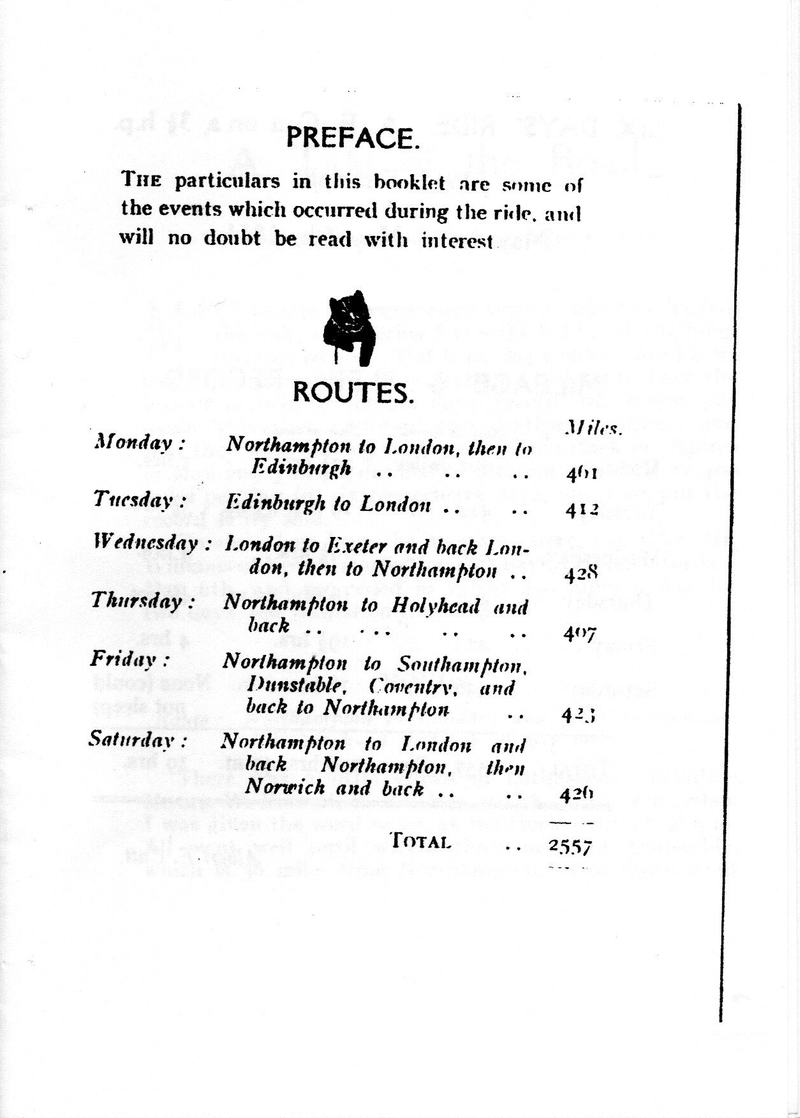
There was then a short stop at Berwick-on-Tweed to shorten the stretched drive belt but he then ran out of petrol shortly after. He obtained a “few cupfuls of paraffin” from a small store whose owners told him he could obtain petrol at Cockburn Path some 9½ miles further on. The Triumph ran out of petrol (or perhaps paraffin) again “but oh! what a pleasure! about 50 yards off I saw a sign “Petrol.” Leaving Cockburn Path “the machine pulled up, and I found the exhaust valve had lengthened: a small matter, a few strokes with the file soon put matters right.” A few miles short of Dunbar Albert met his friend Hosick who was riding a Humber: “It was raining lightly, and the wind was blowing a gale and he (Hosick) had no protection.” Then in Musselburgh both were admonished by a policeman who shouted, “Why the d---- don’t you ring your horn.” Albert finally reached Edinburgh having covered 461 miles in 21¼ hours and was, unsurprisingly, “tired out.”
Bear in mind this was only his first day and he had over 2,000 miles still to cover – the man must have been made of steel. Northampton section did, at some time in the past, recreate Albert’s adventure but did it in several sections over a far longer period of time. Our modern day equivalent would be our chairman and treasurer, Trevor Pinfold, who rode to Edinburgh and back in 20 hours on his Honda CX500. He managed to avoid all but 10 miles of motorway and staying on “A” roads with, apparently, not so many punctures! He also was able to make a donation to the Air Ambulance by his efforts.
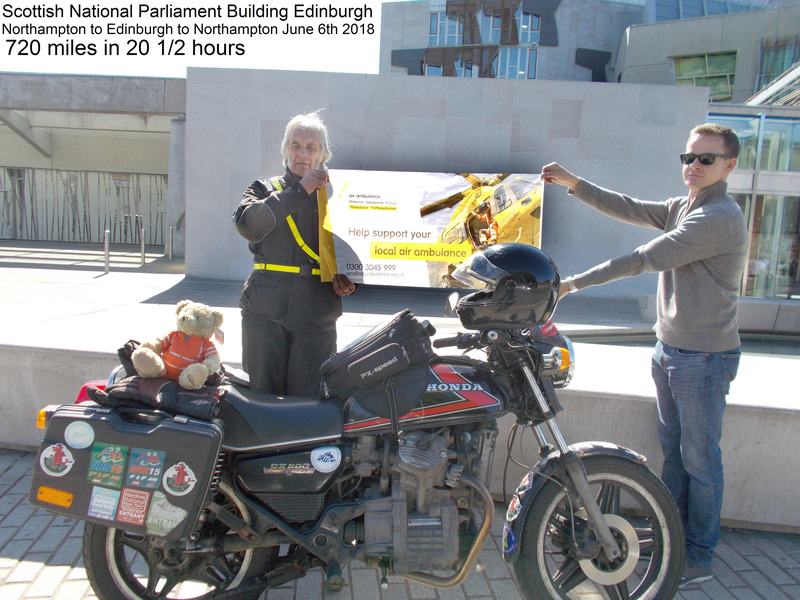
Trevor Pinfold at the Edinburgh parliament
Back in the early days of motorcycling journalism there were two principle magazines The Motor Cycle and Motorcycling, affectionately known as the "The Blue 'un" and the "The Green 'un" to help distinguish them from each other. Journalists writing for these magazines of tern used pseudonyms, apparently “to protect their professional reputations, compartmentalize their personal and public lives and engage with a highly educated readership.” One such was Ixion, a name taken from Greek mythology, who began riding in 1898 and wrote for the Motorcycle from 1900 until his death in 1961. He described his journeys on those early motorcycles and was arguably one of the most popular motorcycle journalist of his time.
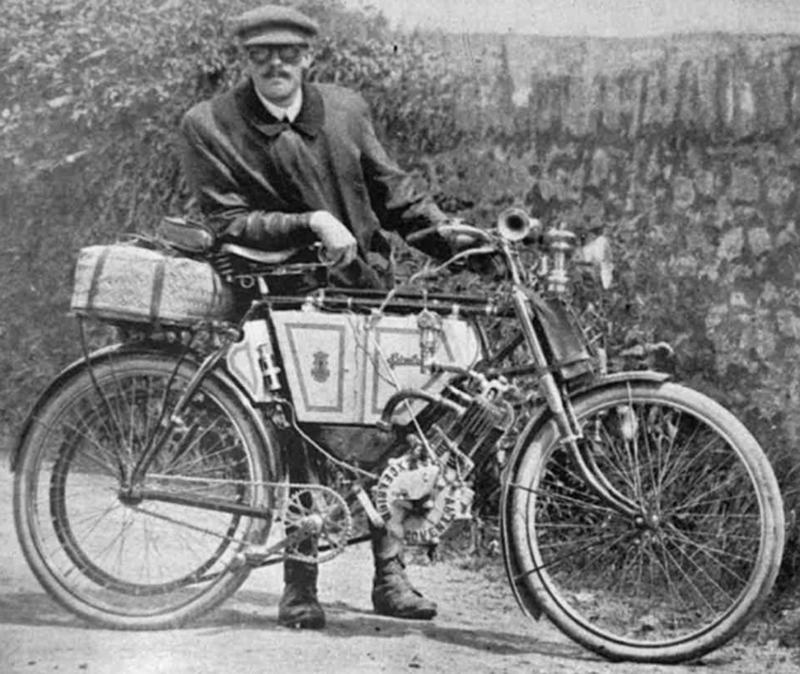
Canon Basil H Davies aka Ixion
The man behind Ixion was, in fact, the Canon Basil Henry Davies, his vocation perhaps why he concealed his name behind the pseudonym. As well as being a priest, ardent motorcyclist and journalist he was also an author and penned what may be the first book about motorcycling “Motor Cycle Reminiscences” but is probably better known for “Motor Cycle Cavalcade”. All very interesting but what has this to do with Northampton? Well we know from census returns that in 1911 he was living at St Sepulchres Vicarage, Royal Terrace in Northampton with his wife and daughter and was described as a “Clergy Man” at the Church of The Holy Sepulchre said to be the oldest building in Northampton.
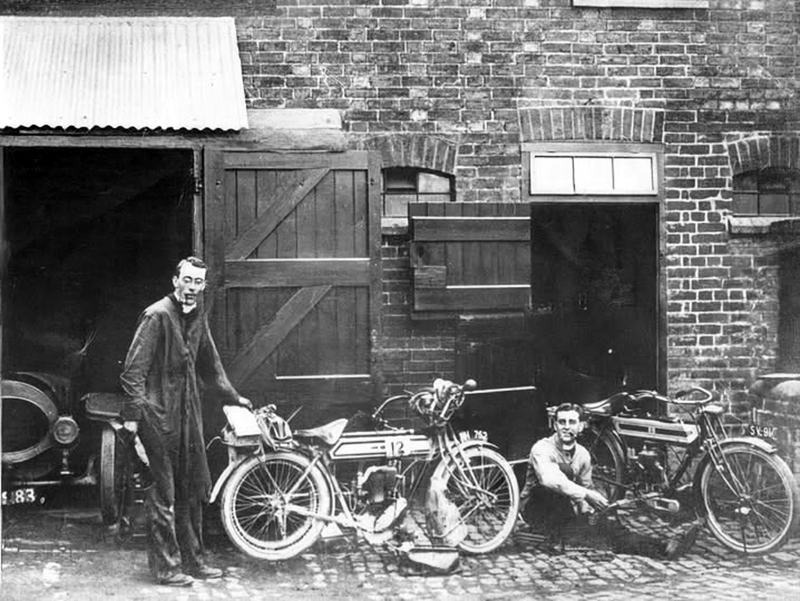
Ixion is on the left in this photograph
In 1921 he was still living in Northampton at 8 St Georges Street but was now a vicar at Lodsworth in Sussex. In that “Motor Cycle Reminiscences” was published in 1920 its likely it was penned in Northampton and in another of his books, “Extremes Meet or Some or Some Mixed Rides” he wrote “Or, again, I recall a more recent ride from Northampton to Durham in torrents of rain and distinctly permeable overalls. On this occasion the machine behaved perfectly, and my bête noire was a worn engine pulley, in combination with three rubber belts, which did not fit it. Since that ride I know every dead leaf along the Great North Road by heart; for did I not spend the entire day cutting, drilling, and piercing under every green tree, while the pitiless rain entered the back of my neck and trickled icily down to the hem of my trousers.” Another Northampton legend.
Now to something more recent the Northampton VMCC. With Trevor Pinfold’s help it has been possible to identify members from the early days of the Northampton section based on riders who took part in the 1960 Banbury Run.
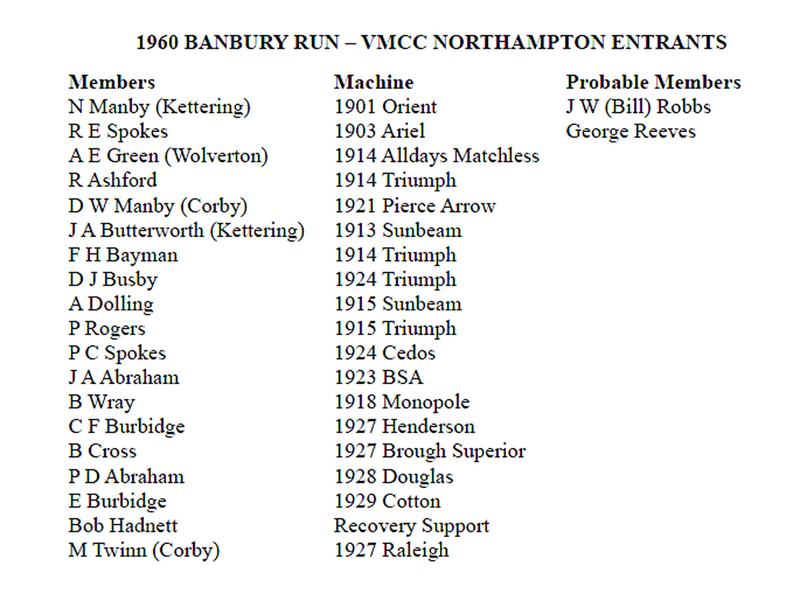
One of the riders was Brian Wray who entered a 1918 Monopole; Trevor’s brother, David, was an ardent photographer and took a picture of his Monopole at the VMCC Founder’s Day in 1964.
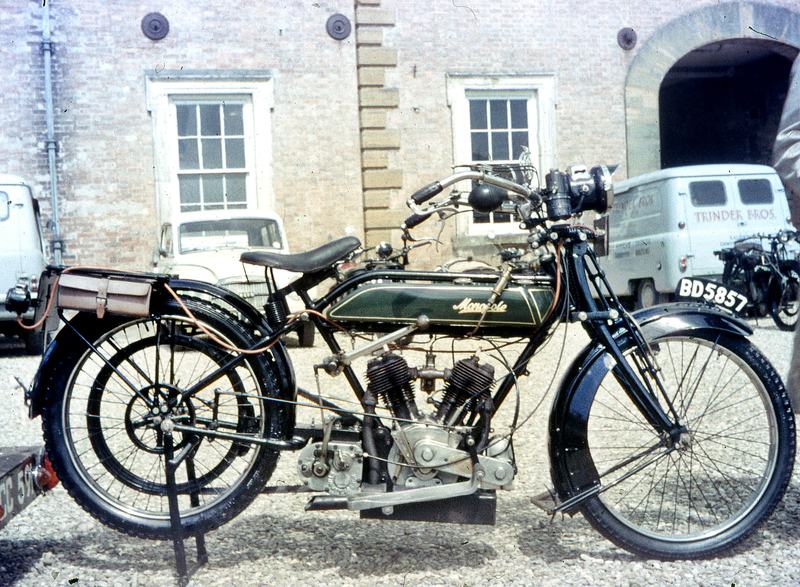
1918 560cc Monopole at Stanford Hall for Founder's Day 1964 and belonging to Brian Wray
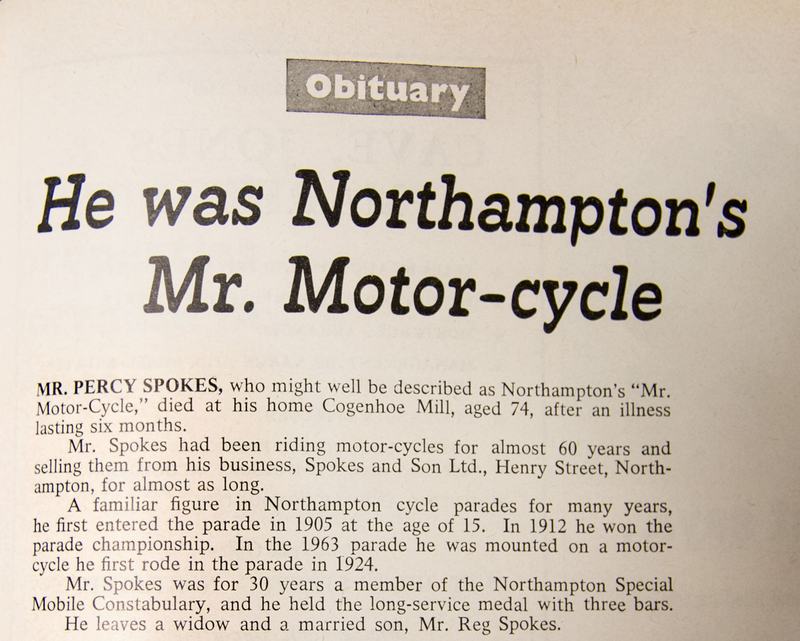
One of the riders shown on the Banbury Run back in 1960 was Mr P C “Percy” Spokes who was also a motorcycle legend in Northampton.
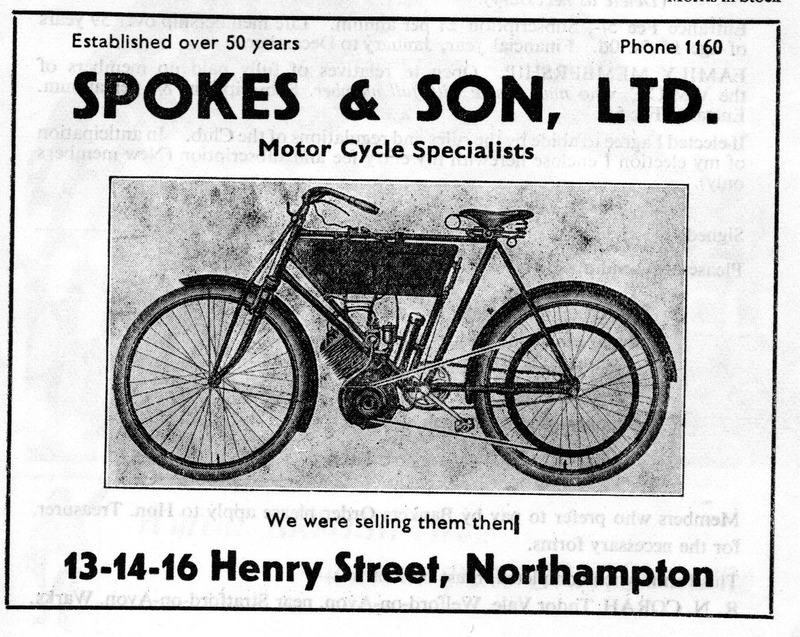
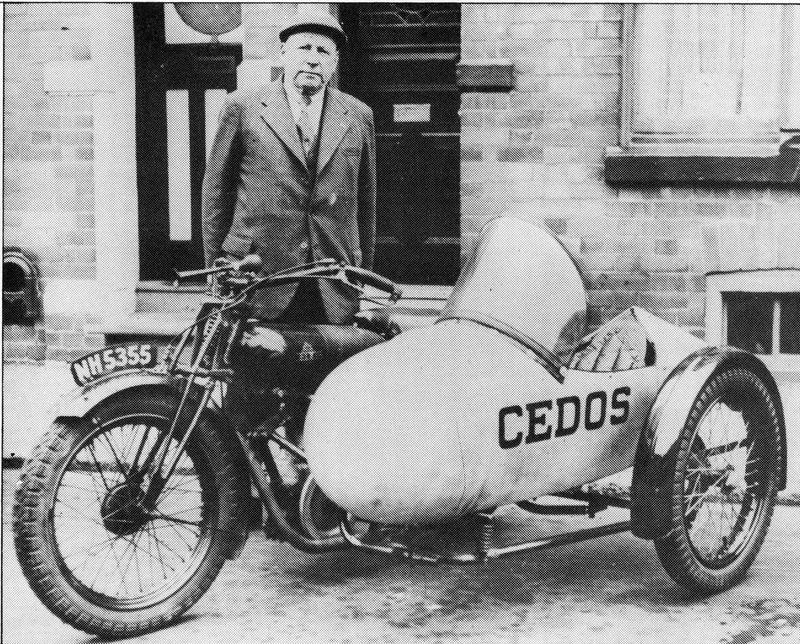
Mr Spokes is said to have started his motorcycle business in 1907 at 1-3 Henry Street in Northampton; he became a director of the third iteration of one of the town’s motorcycle manufacturers, Cedos, in 1926. He was a great proponent of the marque and owned a 350cc model powered by powered by Granville Bradshaw's famous air/oil-cooled engine, which used oil pumped into an alloy jacket to cool the cylinder. Attached to the motorcycle was a Watsonian sidecar which his wife, Edith, used to ride in. She was also a keen motorcyclist who won a Gold Medal for Cedos in the ACU six day trial in 1923 in the Lightweight class riding a Cedos.
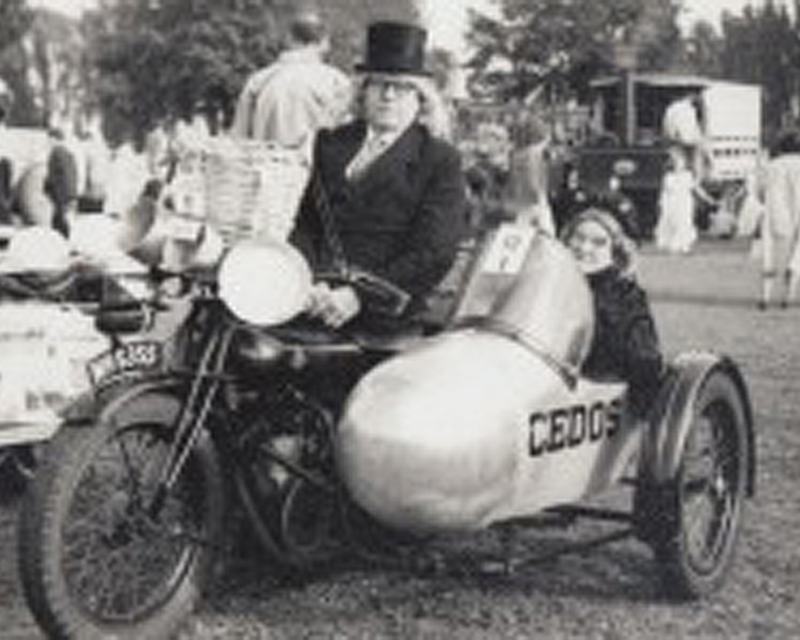
Percy and Edith Spokes with Cedos at Northampton Carnival
By the mid-1950s Spokes & Sons were selling BSA, Matchless, Excelsior, Triumph, Vincent, Ariel, Bella and Royal Enfield motorbikes and also sold parts and tyres for all motorbikes. Spokes and Son carried on until 1967 when the business was sold to Mick Berrill who worked at several places and was in partnership with Bert Avill, trading as Avill and Berrill in Barrack Road. . Percy Spokes departed this life in 1964.
However his Cedos sidecar outfit still lives on; it appeared at a Bonhams’ auction in 2014 when it sold for a tad under £10,000.
Another Northampton motorcycling legend and Northampton section member was Mick Hemmings. Mick was born in 1944 in Northampton and started work in a motorcycle shop at the tender age of 14. His first taste of racing was at the age of 17 when his employer encouraged him to have a ride around Silverstone on a Manx Norton they were delivering “ It was fantastic. The sound. The feel. It was my first time on a bike like that.” He started racing competitively in 1970 at Silverstone on a Norton Commando and later a Rob North frame Triumph Triple. He subsequently rode in the Maudes Trophy for BMW and won, the Manx Grand Prix and the Bol d’Or. He also notably won the inaugural Goodwood Revival meeting riding a 1998, 500cc Matchless and beating twice 500cc world champion Barry Sheene. He won the Revival again in 2000 and also won international classic races in Japan, Italy, and France as well as in the UK.
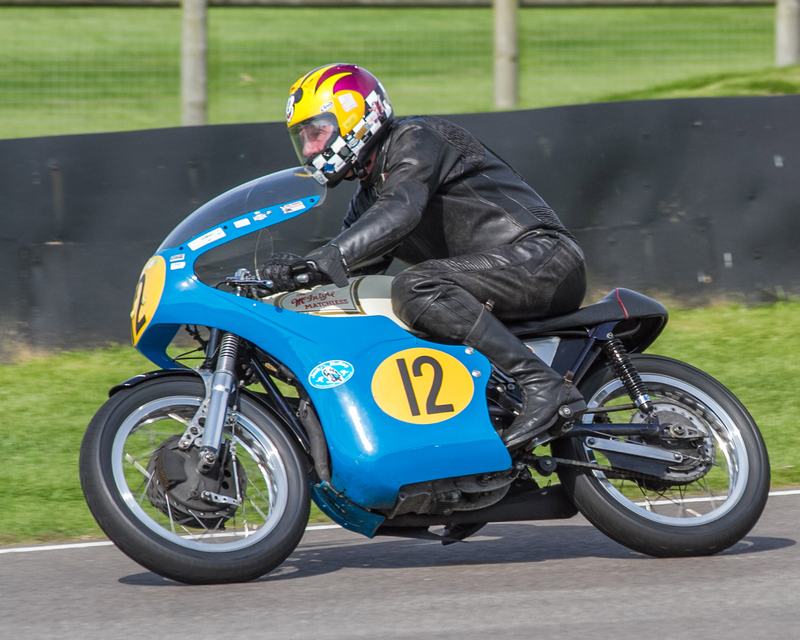
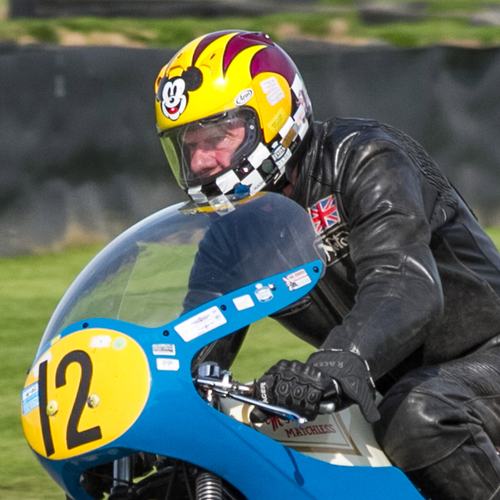
Mick Hemmings at Goodwood 2015 riding a 1962 500cc McIntyre Matchless
Over the years Mick worked in several fields including a spell with Motorcycle News (MCN) in London’s Chancery Lane. In 1974 he opened his own shop and received help and encouragement from Mick Walker, renowned author of motorcycle books. In the heyday of the 1970s he had a franchise for Nortons and Triumphs and then Suzuki but, like all good things, this came to an end in 1989. He then opened a shop in Overstone Road, Northampton, and with his wife, Angie, become immensely successful and the go-to man for anything Norton, particularly Commandos, and Triumph. In 1975 he had become an agent for Quaife five-speed clusters and worked closely with Rod Quaife on developing a six-speed version. So it was unsurprising in 2015, aged 71, when he closed his town centre shop to concentrate on engine and gearbox preparation from an extensive home-based workshop. In 2020, aged 76, he decided to further scale down by building gearboxes only was on target to build and supply his 1000th gearbox. Mick died in 2021 and you can read more about him here click here
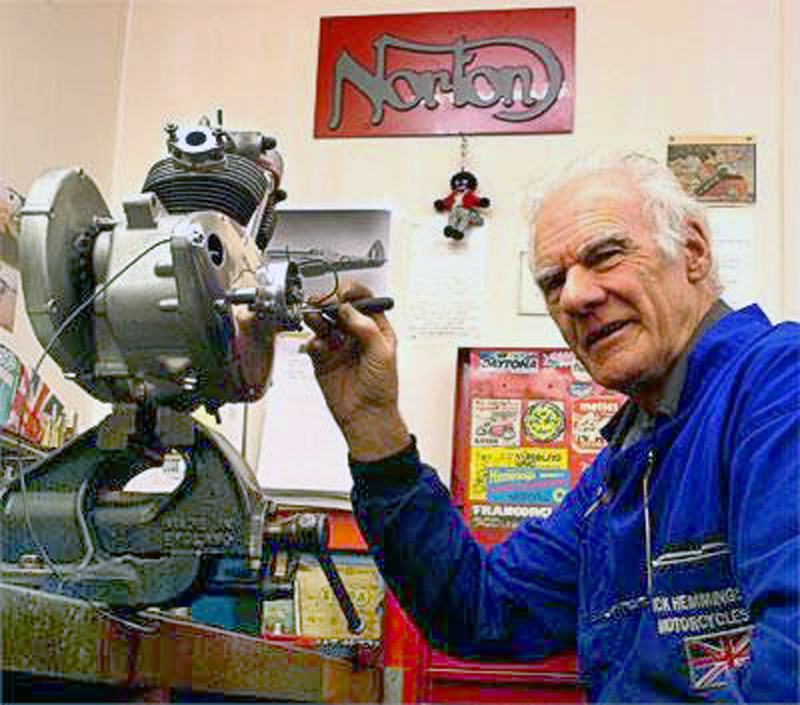
Mick Hemmings in his workshop